Choosing engraving or printing for corporate gifts in Uganda starts with the selected material and the appearance you want. MistaGift in Kampala can discuss a suitable branding treatment for the proposed item. Compare a material-compatible finish and a colour treatment before deciding which version best represents your organisation.
A logo on a screen is not yet a finished mark on a bottle or notebook. Its colours, small lettering and fine lines may behave differently once the surface curves or changes texture. The useful question is how you want the recipient to see and use the final object.
If exact brand colours are important, ask which printing method is suitable for the chosen surface. If you prefer a restrained material-based mark, discuss an appropriate engraving or impression treatment. A gold-looking name on a notebook could involve foil rather than engraving, so describe the result instead of using those terms interchangeably.
How should a buyer compare the two finishes?
Compare the treatments on the actual proposed product, at the intended size and position. Look at readability, colour expectations, surface feel and the available care guidance. A digital mock-up helps explain placement, while a suitable physical sample can show qualities that a screen cannot communicate.
Ask what the material is before naming the method. Genuine leather, synthetic cover material, metal and coated surfaces need their own assessment. One attractive example does not establish that the same finish will work on another item. Keep the product and branding decisions connected in the quotation.
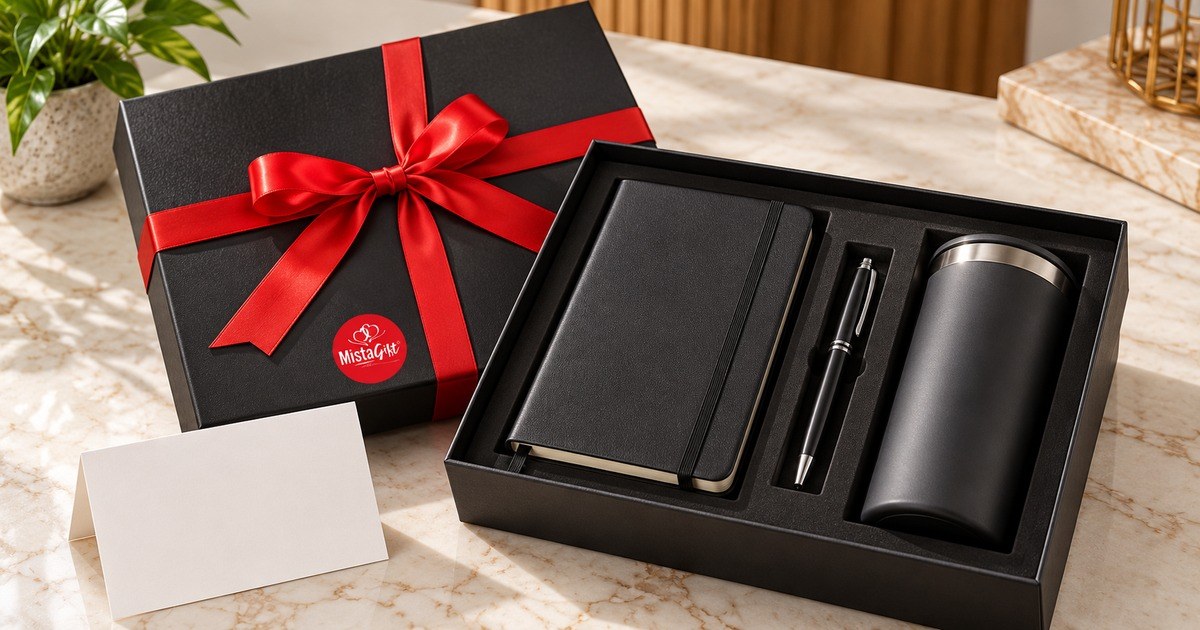
For a mixed gift set, the finishes can be coordinated without forcing every item through the same process. The notebook might use one treatment and the pen another. A shared scale and careful placement can hold the presentation together. The box and message provide further room for the company identity.
Brand teams in Kenya or Rwanda approving a logo for a Ugandan office can place the order from there.
Explore MistaGift’s corporate catalogue, then share the approved logo file and the product direction. Ask to compare the appearance you need before committing to a method. Confirm the final product-specific treatment and timing with the team. That conversation helps avoid a familiar disappointment: approving a beautiful logo on a screen and discovering that the chosen finish changes what made it recognisable.